Case Studies
Orbital IT engineers data center infrastructure to your sites and constraints. Accelerate your time to RFS (ready-for-service) by leveraging Orbital IT's engineering and procurement expertise. We design to your power profile, footprint, timelines and density targets.
Neocloud-Grade
Air-Side Cooling
Custom air-side HVAC engineering, delivered on an RFP timeline to meet a major neocloud operator's SLA requirements.
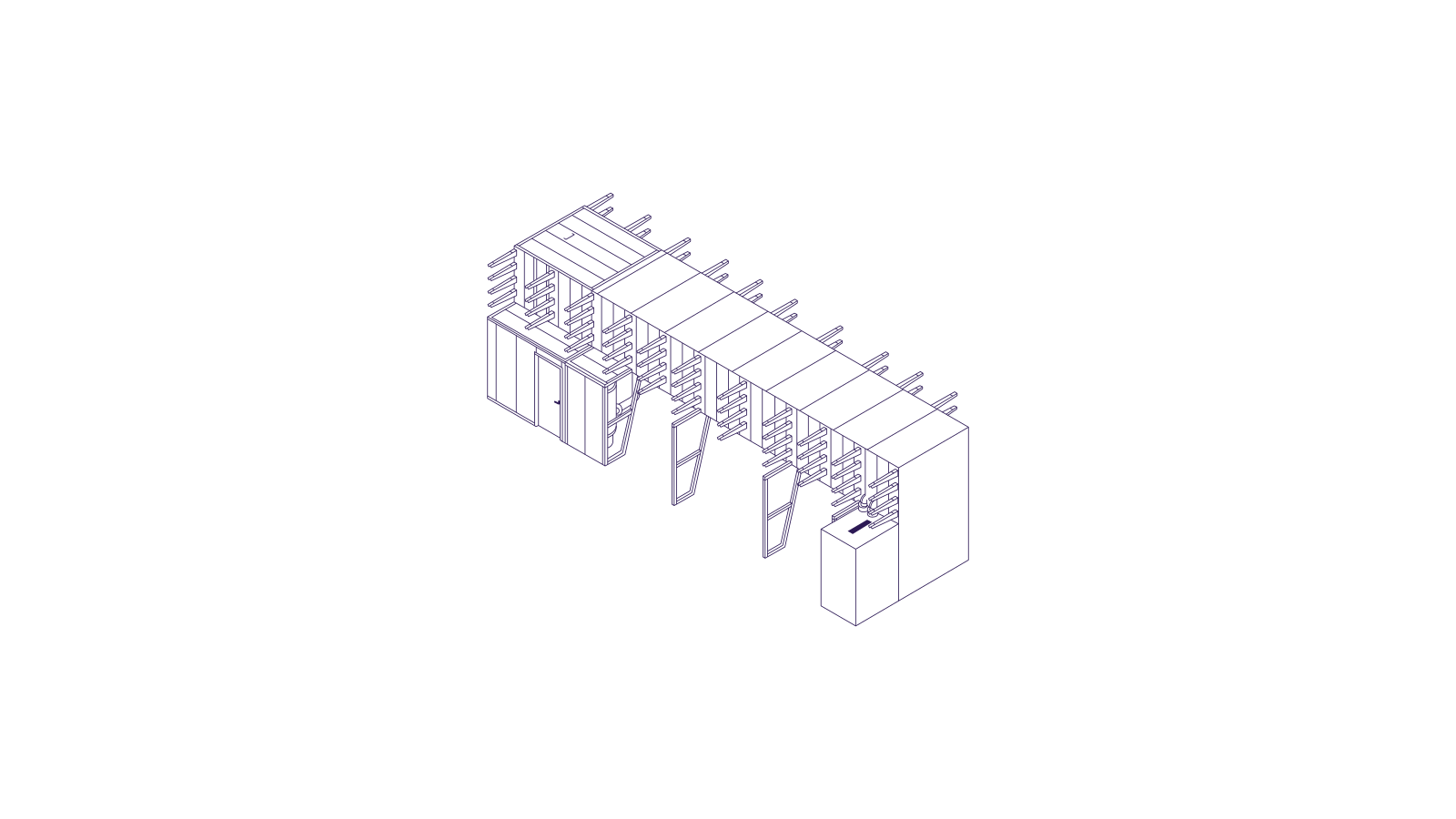
The Project
A data center developer in the eastern United States needed air-side cooling for a new facility being built for a major neocloud operator. The cooling system had to meet the operator's SLA requirements and drawings ready for manufacturing within a month.
The Result
Orbital IT delivered custom HVAC unit, and construction-ready documentation scoped to the neocloud operator's SLA requirements.
Orbital IT designs across every cooling modality, from air cooling to single-phase direct liquid cooling and two-phase direct-to-chip systems.
Orbital IT Engineering Solution
Orbital IT designed a custom HVAC unit tailored to the site's cooling requirements and SLA targets. The engineering deliverable was scoped alongside the construction partner's broader facility design.
Orbital IT applies its depth of expertise in high-density liquid and two-phase cooling systems to the air-side scope, ensuring the solution was engineered to the same standard, regardless of cooling modality.
Scope
- Custom HVAC unit design for an air-cooled data center environment
- Engineered to neocloud SLA requirements
- Construction pack and selections tailored to partners supply chain and customer requirements
Turning stranded
capacity into revenue
A hardened module solution turned 2.5 MW of stranded capacity into new AI compute revenue, without new construction.
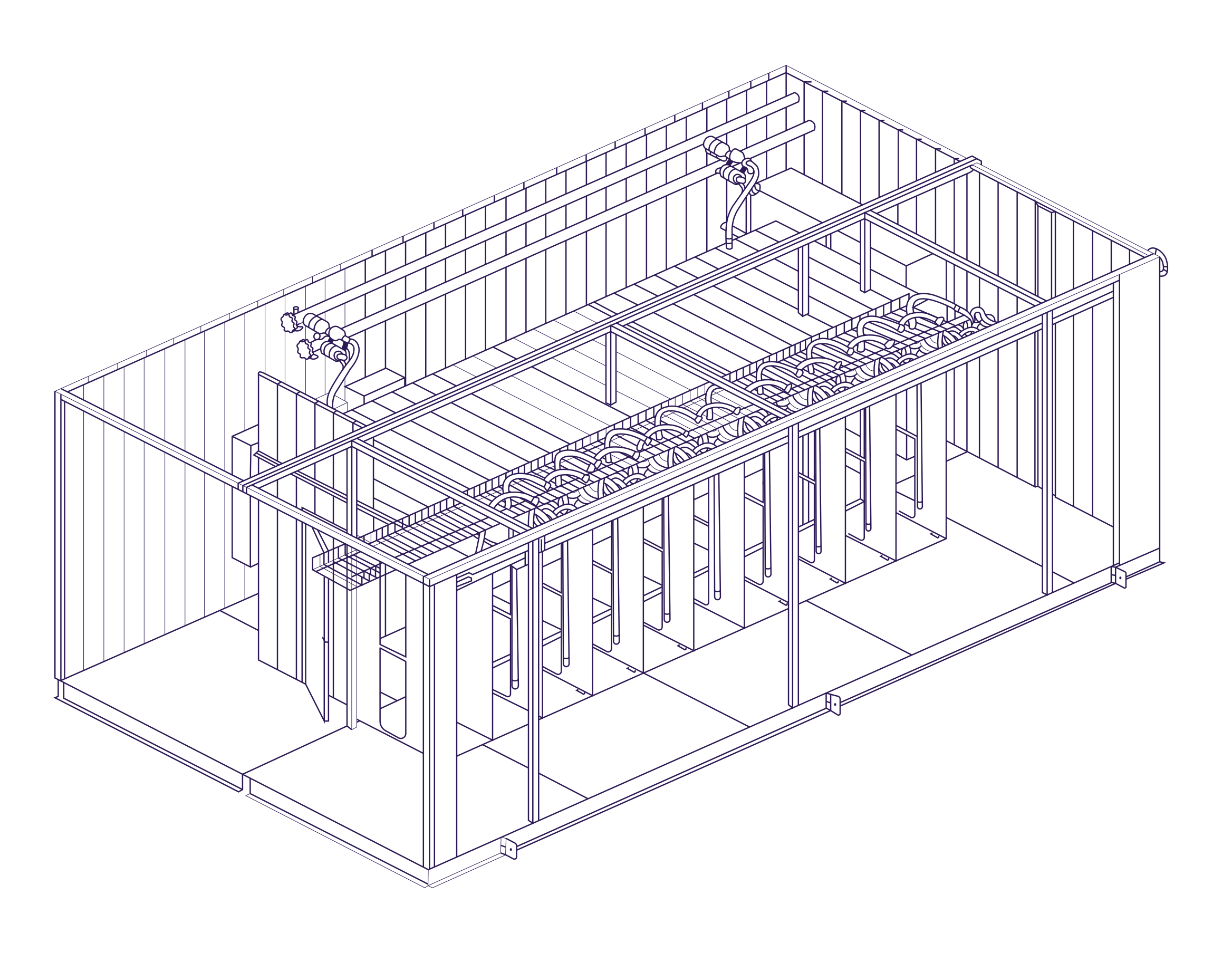
The Project
A data center operator had a Midwest facility with stranded capacity. The existing building couldn't be expanded to enable the deployment of an additional 2.5 MW of capacity without a new thermal solution, and traditional construction timelines of 12 to 18 months would miss the market window.
The Result
Orbital IT converted the facility's stranded 2.5 MW into additional AI data center capacity, enabling the operator to generate more revenue from previously idle power. The modular approach eliminated the cost and timeline of new construction, bringing additional racks online without a ground-up build.
The stakes of speed and flexibility are significant: at industry benchmarks, stranded capacity at a 20 MW facility can represent roughly $1.5M to $2.5M per month in unrealized revenue. Every month of acceleration converts directly into recovered revenue.
Orbital IT Engineering Solution
Orbital IT engineered a custom hardened data center module solution designed to bolt onto the existing building, activating 2.5 MW of stranded capacity without a new structure.
The solution is self-contained by design, integrating Hot Aisle Containment, single-phase direct-to-chip cooling infrastructure, and rack-ready deployment into a single specified unit, reducing on-site work and compressing time to live compute.
Scope
- 2.5 MW of stranded capacity activated
- IT leaf designed for NVIDIA's GB300 — liquid and air cooled integrated seamlessly
- Electrical infrastructure (e-house) design
- Modular deployment, no ground-up construction required. Shipped to a slab in the existing campus
Retrofitting an Existing
Industrial Facility
A Hot Aisle Containment solution converted a vacant industrial site into AI-ready compute while it stayed operational.
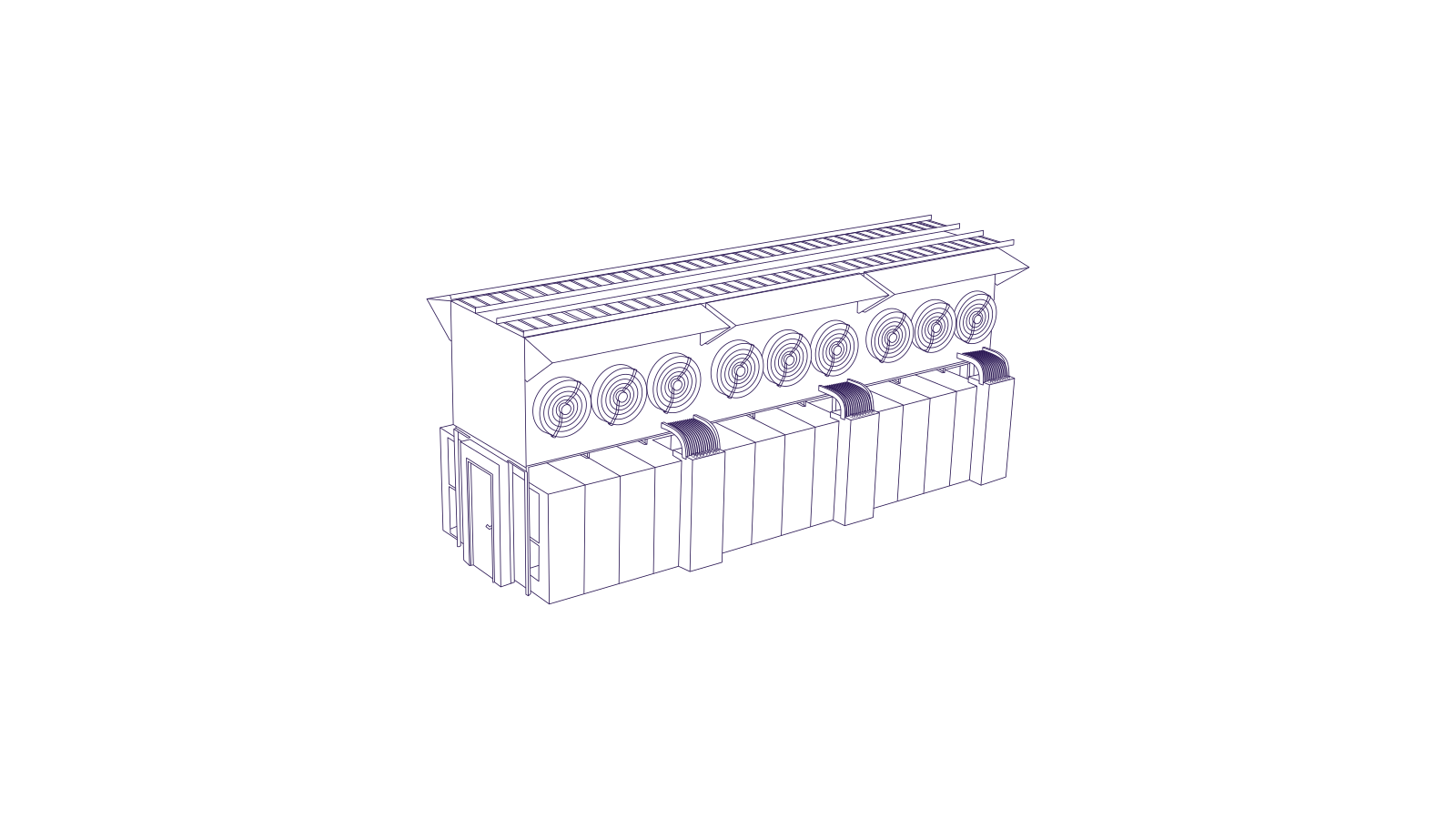
The Project
A data center operator in Texas needed to retrofit an existing vacant industrial site to support higher-density AI workloads. The site had a powered shell, but needed tailored white space infrastructure that fit within the existing non-DC building envelope.
The Result
Orbital IT delivered the engineering and module design for seven HAC modules across the facility, with a dedicated installation partner handling on-site deployment. For the operator, that meant access to specialised thermal engineering depth without needing to source it, paired with installation execution grounded in local site knowledge.
The design was optimised for fast assembly around existing site constraints, and the facility remained fully operational throughout.
Orbital IT Engineering Solution
Orbital IT designed a Hot Aisle Containment (HAC) solution engineered around the existing site's limitations and optimized for fast installation and assembly on-site. Orbital IT provided the engineering and design, while an installation partner managed on-site deployment, coordinating installation around the facility's continued operations.
Scope
- Seven HAC modules engineered to transform existing industrial site into an AI data center
- Installation coordinated with a dedicated installation partner
- Design optimized around shortest lead time major components available
- Incremental deployment, with the facility remaining operational throughout
Standardized Electrical
Infrastructure for
Multi-Site AI Deployment
A standardized, factory-tested e-house design supports a manufacturing partner's full multi-site GPU deployment pipeline.
The Project
A global engineering and manufacturing partner had a contract to deliver data center infrastructure at a large greenfield site on the US East Coast for a major neocloud operator. The project required both Hot Aisle Containment (HAC) modules and electrical skids engineered for next-generation GPU platforms requiring 100% liquid cooling at rack densities above 190 kW. The partner had manufacturing capability in place, but needed thermal and electrical engineering depth for the latest silicon generation.
The Result
Because the design is factory-assembled and tested before it ships, on-site labor and commissioning risk are reduced relative to a fully custom, on-site-built approach.
For the manufacturing partner, this meant a single validated design that can support its full US deployment pipeline without re-engineering for each new site, freeing its own resources to focus on production and delivery rather than electrical design.
Orbital IT delivered a standardized e-house design that eliminates the need for custom electrical engineering on every project, cutting site-specific configuration down to days rather than weeks.
Orbital IT Engineering Solution
Orbital IT designed both the HAC and e-skid systems for the site, validated against next-generation GPU thermal specifications. The e-house design was engineered for standardization: a single electrical distribution architecture that can be configured to site-specific utility parameters (voltage, redundancy level, and capacity) and reused across multiple deployments, rather than engineered from scratch for each site. The completed designs were shared with the manufacturing partner for pricing and production.
Scope
- HAC and e-skid designs engineered for next-generation GPU deployment
- Standardized e-house module: 48' x 12' x 12'
- Full electrical distribution design: switchgear, UPS, PDU, and busway
- N+1 power redundancy, 400 to 480V AC
- Factory-assembled and tested prior to shipping
- Vendor sourcing coordinated across multiple tier-1 electrical equipment suppliers
Campus-Scale Basis
of Design: 252 MW
Phase 1, Engineered
for Expansion to 2 GW
A complete Basis of Design for a 252 MW first phase, engineered with a clear path to scale to 2 GW.
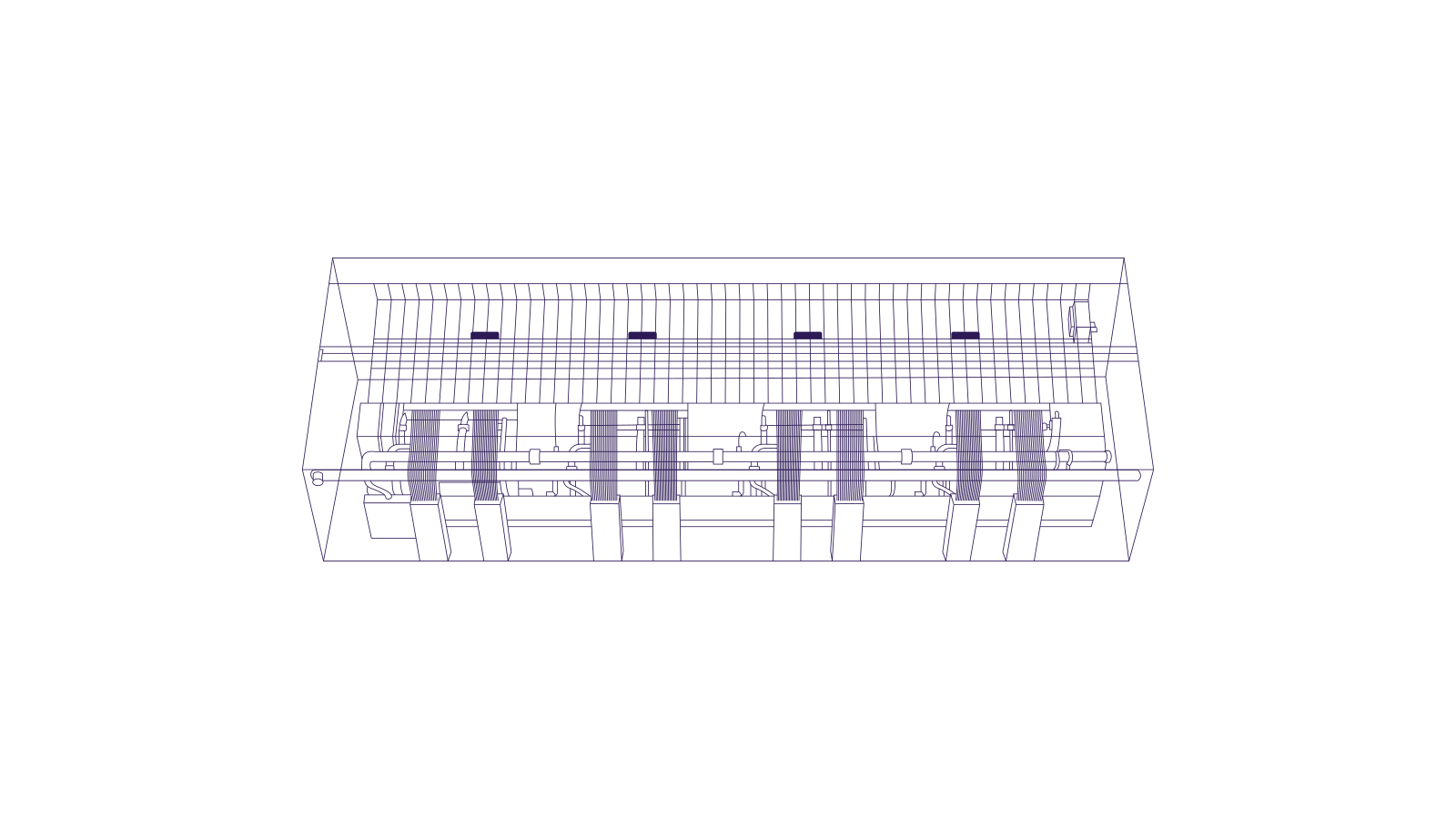
The Project
A compute-focused technology company was planning a phased AI training campus in the US Southwest, with a 252 MW first phase and a long-term build-out plan reaching 2 GW of total IT capacity. The project required a complete Basis of Design covering mechanical, electrical, and cooling systems, with support for next-generation GPU silicon from two different vendors. The design needed to account for campus-scale power distribution, cooling infrastructure across two dozen blocks, and data halls spanning tens of thousands of square meters.
The Result
The output is a construction-ready reference design covering power distribution, cooling architecture, and rack layout across the full campus footprint. For an operator planning a build of this scale, that means the engineering groundwork is in place before ground is broken, reducing the redesign risk and timeline exposure of committing to campus-scale infrastructure decisions early.
The Basis of Design gave the operator a validated blueprint for a 252 MW first phase, engineered from the outset to scale to 2 GW without a redesign at each stage of growth. The operator retains the flexibility to select or switch silicon vendors as roadmaps shift.
Orbital IT Engineering Solution
Orbital IT produced a complete Basis of Design for the 252 MW first phase, engineered with an expansion path to the full 2 GW build-out. The design was validated against both NVIDIA and AMD next-generation GPU platforms, giving the operator architectural flexibility as silicon roadmaps evolve, rather than committing to a single vendor's thermal and electrical requirements upfront.
Scope
- 252 MW Phase 1 IT capacity, engineered with an expansion path to 2 GW at full build-out
- Over 2,100 GPU racks at 110 kW each (Phase 1)
- 75% direct liquid cooling, 25% air-cooled split
- 24 cooling blocks at 12 MW each, N+1 redundancy
- Dual GPU architecture support (NVIDIA and AMD next-generation platforms)
Why engineering speed and quality matters



For operators
The difference between a well-engineered design and a poorly specified one is the difference between a build that completes on time and one that doesn't.
For developers
The difference between RFS (ready-for-service) in time for a tenant's GPU allocation, and losing the deal.
For anchor tenants
The difference between training the next model on time, and shipping it late.
Talk to our team
Tell us your site constraints, power availability, and target rack density. We'll come back with a technical scoping session and an engineering proposal designed for your site.